
$65.00 – $205.00Price range: $65.00 through $205.00
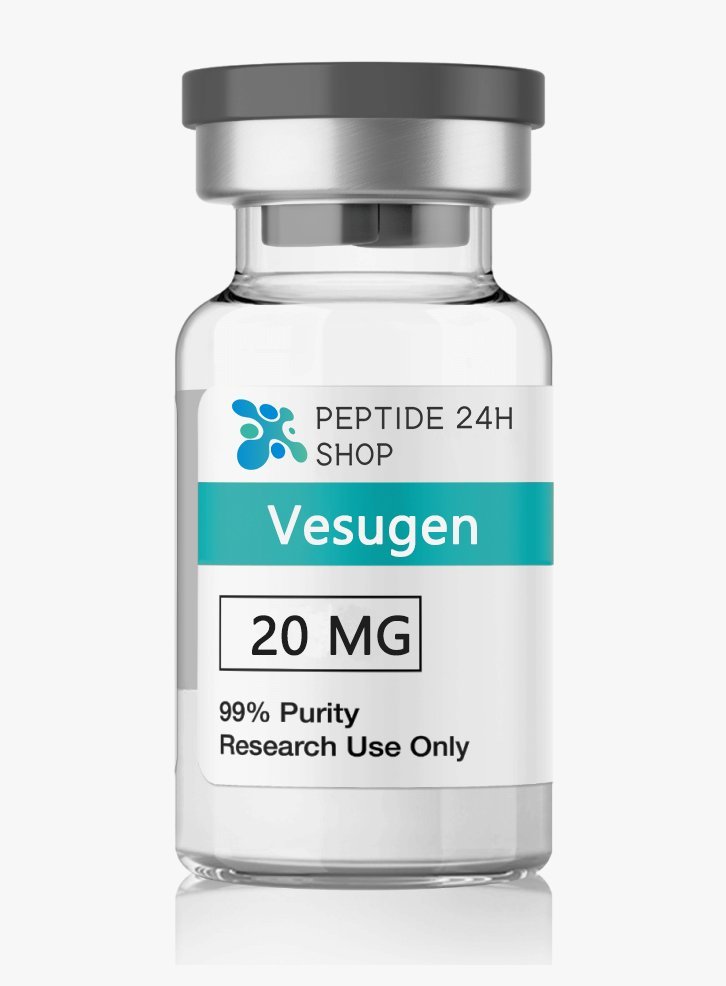
Name: Vesugen
Molecular Formula:C15H26N4O8
Molecular Weight:390.39
Appearance: White Lyophilized powder
Synonyms: KED peptide ; Lys-Glu-Asp
Vesugen peptide is a synthetic, research-grade peptide widely utilized in laboratory studies to investigate angiogenesis, tissue regeneration, and vascular biology. Its high stability, reproducibility, and purity make it an indispensable tool for scientists exploring vascular development, regenerative medicine, and preclinical therapeutic models.
Vesugen is a bioactive peptide that promotes angiogenesis, the formation of new blood vessels from existing vasculature.
In research applications, Vesugen peptide is primarily used to study:
Its precise and controlled activity allows researchers to accurately model vascular growth and regenerative processes in both in vitro and in vivo experiments.
| Property | Description |
|---|---|
| Peptide Name | Vesugen |
| Amino Acid Length | Short-chain bioactive peptide |
| Purity | ≥98% (HPLC tested) |
| Form | Lyophilized powder |
| Molecular Weight | Approx. 500–1500 g/mol (depending on synthesis) |
| Storage Temperature | –20°C (long-term stability) |
High-purity Vesugen peptide ensures reproducible and reliable results for studies in vascular biology, tissue repair, and regenerative medicine.
Vesugen peptide is intended exclusively for laboratory research. Key applications include:
By utilizing Vesugen peptide, researchers can gain critical insights into vascular biology, tissue repair, and regenerative mechanisms.
Vesugen peptide is for laboratory research only. It is not intended for human or veterinary use and is not a pharmaceutical product. Use only in controlled laboratory environments by trained personnel.
Q1: What is the main research purpose of Vesugen?
A: Vesugen is primarily used to study angiogenesis, vascular growth, and tissue regeneration in laboratory research.
Q2: What is the purity of Vesugen peptide?
A: High-quality Vesugen peptide is typically ≥98% pure, verified using HPLC testing.
Q3: Can Vesugen be used in humans?
A: No, it is strictly for research purposes and not approved for human or veterinary use.
Q4: How should Vesugen be stored?
A: Store lyophilized at –20°C. After reconstitution, refrigerate at 2–8°C and avoid repeated freeze–thaw cycles.
Q5: Why is Vesugen valuable for research?
A: Its ability to stimulate angiogenesis and vascular signaling makes it essential for studies in vascular biology, regenerative medicine, and tissue repair.
Vesugen peptide is a high-purity, research-grade peptide designed for studies of angiogenesis, tissue regeneration, and vascular biology. Its stability, reproducibility, and bioactivity make it a critical tool for laboratories conducting research in regenerative medicine, cardiovascular biology, and wound healing.




&url=https://primehealthpharmacy.com/product/ghk-tripeptide-1/&media=https://primehealthpharmacy.com/wp-content/uploads/2026/01/GHK-Tripeptide-1.jpg)


&url=https://primehealthpharmacy.com/product/elamipretide-ss-31/&media=https://primehealthpharmacy.com/wp-content/uploads/2026/01/Elamipretide-SS-31.jpg)


