
$50.00 – $255.00Price range: $50.00 through $255.00
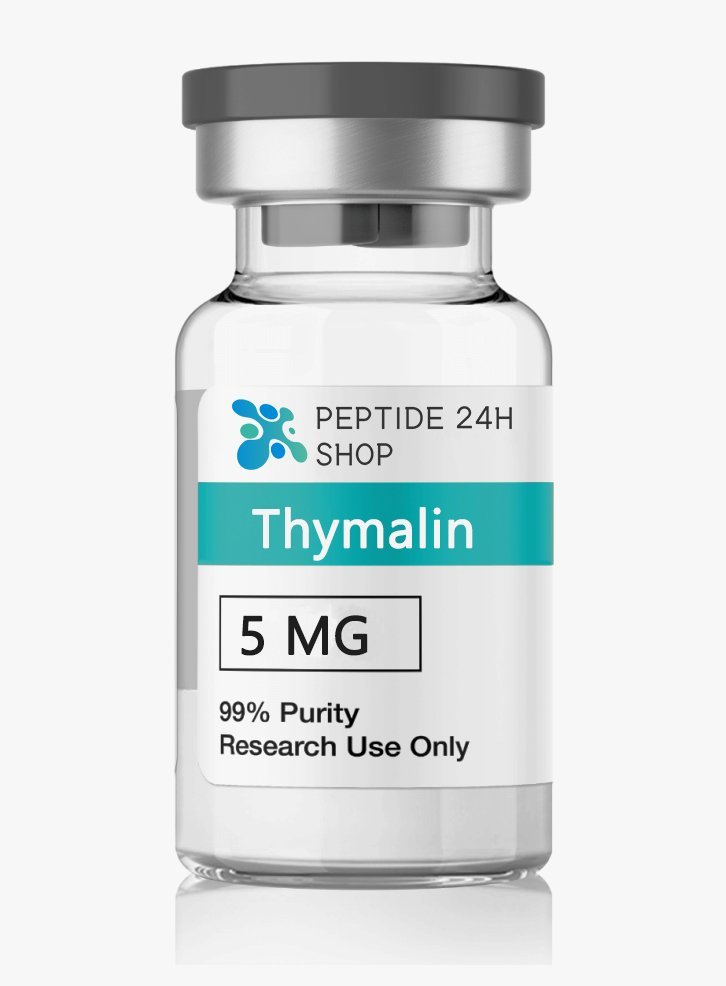
Name: Thymulin; Thymalin; SERUM THYMIC FACTOR
CAS No.: 63958-90-7
Peptide Sequence: Pyr-Ala-Lys-Ser-Gln-Gly-Gly-Ser-Asn
Molecular Formula: C33H54N12O15
Molecular Weight: 858.85
Appearance: White Lyophilized powder
Thymalin peptide is a biologically active, thymus-derived peptide widely used in laboratory and preclinical research to investigate immune system regulation, cellular regeneration, and aging-related biological processes.
Known for its high purity, stability, and reproducible activity, Thymalin is a trusted research peptide for scientists studying immune modulation, thymus function, and cellular signaling mechanisms.
Thymalin is a short-chain thymic peptide originally isolated from the thymus gland. It plays a key role in the regulation of immune cell development, particularly T-lymphocytes, which are essential for adaptive immune responses.
In research environments, Thymalin peptide is commonly used to study:
Its small molecular size allows for precise laboratory handling and accurate modeling of immunological and cellular processes.
| Property | Description |
|---|---|
| Peptide Name | Thymalin |
| Amino Acid Length | Short-chain peptide (approx. 4–10 amino acids, synthesis-dependent) |
| Purity | ≥98% (HPLC verified) |
| Form | Lyophilized powder |
| Molecular Weight | Approx. 303–1100 g/mol |
| Storage Temperature | –20°C (long-term storage) |
High-purity Thymalin peptide supports consistent, reproducible outcomes in immunology and cellular biology research.
Thymalin peptide is intended exclusively for laboratory research. Common research applications include:
Through controlled experimentation, Thymalin enables researchers to gain valuable insights into immune function, thymus activity, and age-associated cellular changes.
To preserve peptide integrity and bioactivity:
Thymalin peptide is for laboratory research use only.
It is not a drug, dietary supplement, or approved for human consumption.
Use should be limited to controlled laboratory settings by qualified professionals.
Q1: What is the primary research use of Thymalin?
Thymalin is primarily used in immune system research, particularly for studying T-cell regulation, thymus function, and immune aging.
Q2: What purity level does Thymalin peptide have?
High-quality Thymalin peptide is typically ≥98% pure, confirmed by HPLC analysis.
Q3: Is Thymalin approved for human use?
No. Thymalin is strictly for research purposes and is not approved for medical or human use.
Q4: How should Thymalin peptide be stored?
Store lyophilized at –20°C. After reconstitution, refrigerate at 2–8°C and avoid repeated freeze–thaw cycles.
Q5: Why is Thymalin important in research?
Its role in immune cell regulation and cellular signaling makes it a valuable peptide for immunology, aging research, and cellular biology studies.
Thymalin peptide is a high-purity, research-grade thymus peptide used extensively to study immune regulation, thymus activity, and cellular regeneration. Its small size, reproducibility, and biological relevance make it an essential research tool for laboratories focused on immunology, regenerative medicine, aging research, and molecular biology.




&url=https://primehealthpharmacy.com/product/ghk-tripeptide-1/&media=https://primehealthpharmacy.com/wp-content/uploads/2026/01/GHK-Tripeptide-1.jpg)


&url=https://primehealthpharmacy.com/product/elamipretide-ss-31/&media=https://primehealthpharmacy.com/wp-content/uploads/2026/01/Elamipretide-SS-31.jpg)


