
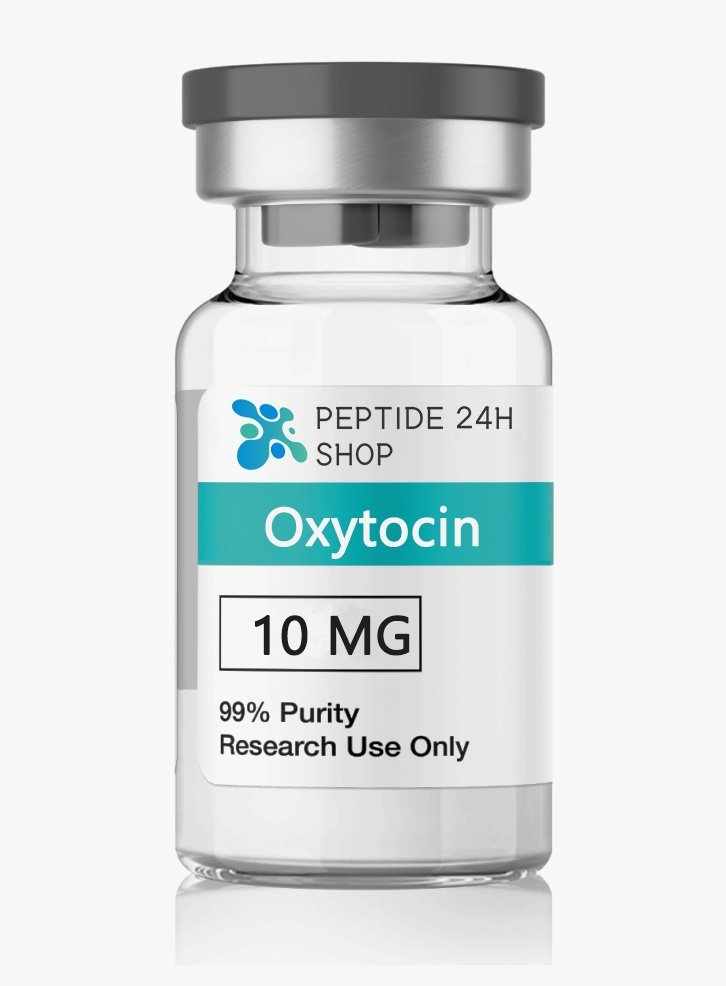
$95.00
Name: Oxytocin
CAS No.: 50-56-6
Peptide Sequence: Cys-Tyr-Ile-Gln-Asn-Cys-Pro-Leu-Gly-NH2(Cys&Cys bridge)
Molecular Formula: C43H66N12O12S2
Molecular Weight: 1007.19
Appearance: White Lyophilized powder
Oxytocin is a naturally inspired nonapeptide hormone analog, extensively studied for its role in social bonding, reproduction, and neurochemical signaling. In research settings, synthetic Oxytocin serves as a precise tool for investigating peptide–receptor interactions, endocrine regulation, and neuromodulation pathways.
This compound is strictly research-use-only (RUO) and is intended exclusively for laboratory, molecular biology, and biochemical studies. It is not approved for human or veterinary applications.
The disulfide bond between cysteine residues forms a cyclic structure that enhances stability and receptor specificity. Synthetic analogs allow researchers to study structural modifications and their impact on receptor binding and biological activity.
Oxytocin, first isolated in the early 20th century, is a well-characterized neuropeptide frequently used in biochemical and neuroscience research. Laboratory studies focus on:
Synthetic Oxytocin provides high-purity, reproducible material suitable for both in vitro and in vivo experiments.
Oxytocin peptide is a critical research tool in neuroscience and biochemical studies, providing insights into brain and endocrine system regulation.
Its synthetic form ensures high purity, structural consistency, and reproducibility, making it ideal for controlled studies on peptide signaling, receptor dynamics, and analog development.
While not intended for human use, Oxytocin continues to advance our understanding of hormonal peptides and neurochemical networks in modern scientific research.














&url=https://primehealthpharmacy.com/product/ghk-tripeptide-1/&media=https://primehealthpharmacy.com/wp-content/uploads/2026/01/GHK-Tripeptide-1.jpg)


&url=https://primehealthpharmacy.com/product/elamipretide-ss-31/&media=https://primehealthpharmacy.com/wp-content/uploads/2026/01/Elamipretide-SS-31.jpg)


