
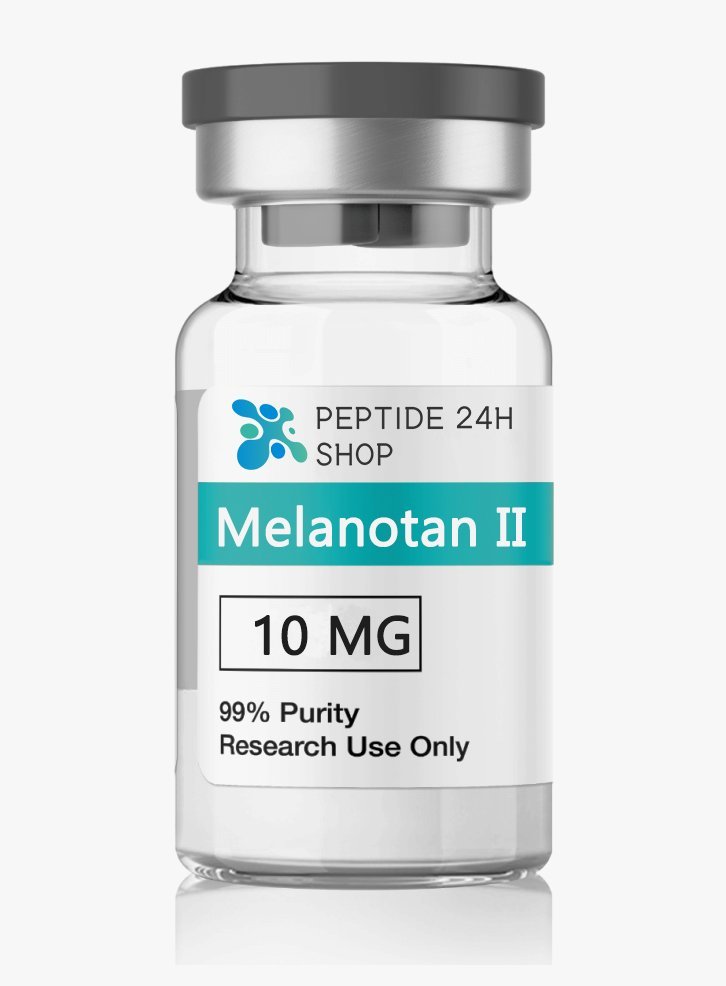
$45.00 – $300.00Price range: $45.00 through $300.00
Name: Melanotan II; MT2
CAS No.: 121062-08-6
Peptide Sequence: Ac-Nle-Asp(1)-His-DPhe-Arg-Trp-Lys(1)-NH2
Molecular Formula: C50H69N15O9
Molecular Weight: 1024.18
Appearance: White Lyophilized powder
Melanotan II (MT-2) is a synthetic cyclic peptide and analog of the naturally occurring α-Melanocyte Stimulating Hormone (α-MSH). Widely used in laboratory research, MT-2 is a versatile tool for studying melanocortin receptor signaling, melanin production, photoprotection, and neuroendocrine pathways.
Designed for laboratory investigations, Melanotan II supports research in dermatology, cellular signaling, energy metabolism, and neurobiology. This peptide is produced under strict GMP-like conditions and verified at ≥98% purity for reproducible experimental results.
| Property | Specification |
|---|---|
| Name | Melanotan II (MT-2) |
| Synonyms | α-MSH analog, Melanocortin II peptide |
| CAS Number | 121062-08-6 |
| Molecular Formula | C₅₀H₆₉N₁₅O₉ |
| Molecular Weight | 1024.18 g/mol |
| Sequence | Ac-Nle-Asp-His-D-Phe-Arg-Trp-Lys-NH₂ |
| Purity | ≥98% (HPLC verified) |
| Form | Lyophilized powder |
| Solubility | Sterile water or PBS |
| Storage | −20°C, dry and protected from light |
| Shelf Life | 24 months (unreconstituted) |
Melanotan II functions as a non-selective agonist of melanocortin receptors (MC1R–MC5R). Key effects in research models include:
Its multi-receptor activity allows researchers to investigate cross-talk between pigmentation, metabolism, and neuroendocrine processes.
Q1. What is Melanotan II peptide?
A: A synthetic α-MSH analog used in laboratory research on pigmentation, receptor signaling, and photoprotection.
Q2. How pure is Melanotan II?
A: ≥98% purity, verified through HPLC and mass spectrometry.
Q3. Can MT-2 be used in humans?
A: No. MT-2 is strictly for scientific research.
Q4. What are common research applications?
A: Melanin production, UV protection, melanocortin receptor signaling, and peptide pharmacology studies.
Q5. How should it be stored?
A: Keep lyophilized peptide at −20°C in a dark, dry place; reconstituted peptide should be refrigerated.
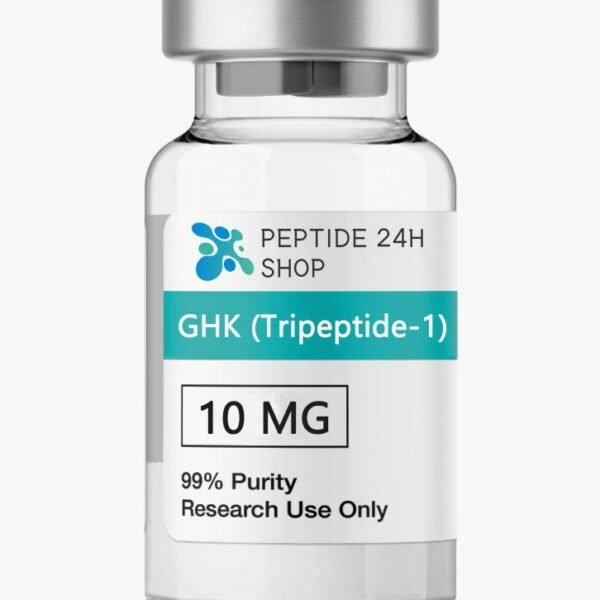





&url=https://primehealthpharmacy.com/product/ghk-tripeptide-1/&media=https://primehealthpharmacy.com/wp-content/uploads/2026/01/GHK-Tripeptide-1.jpg)


&url=https://primehealthpharmacy.com/product/elamipretide-ss-31/&media=https://primehealthpharmacy.com/wp-content/uploads/2026/01/Elamipretide-SS-31.jpg)


