
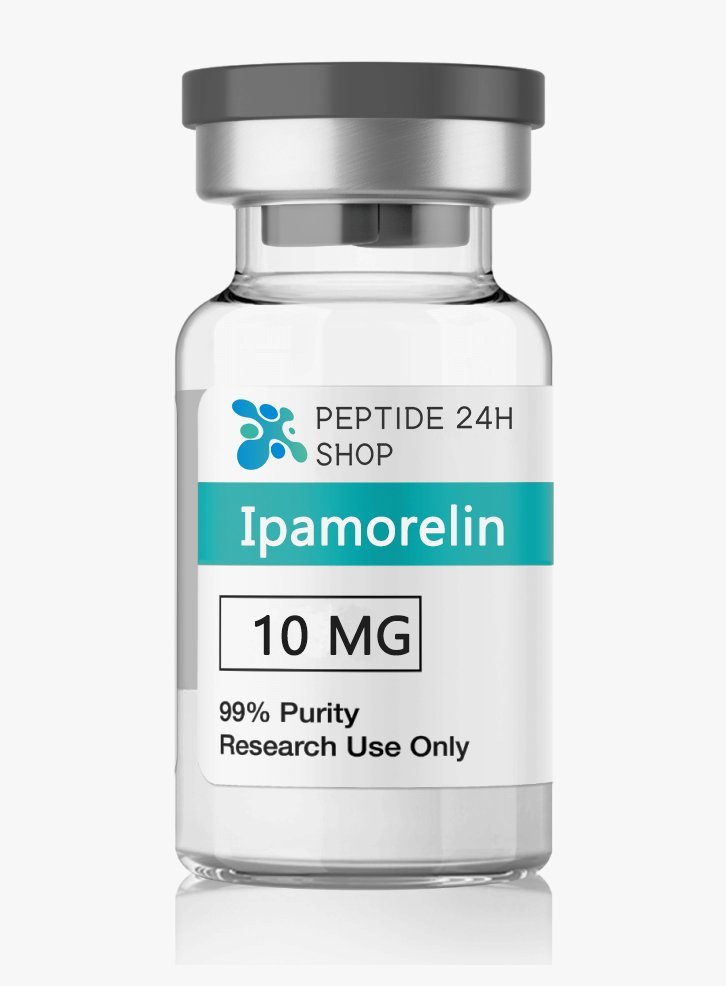
$55.00 – $449.00Price range: $55.00 through $449.00
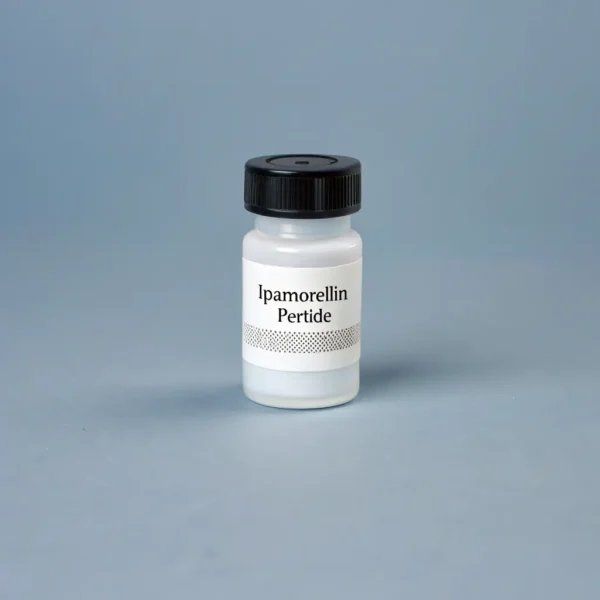
Name: Ipamorelin; Ipamorelin acetate;
CAS No.: 170851-70-4
Peptide Sequence: Aib-His-D2Nal-DPhe-Lys-NH2
Molecular Formula: C38H49N9O5
Molecular Weight: 711.87
Appearance: White Lyophilized powder
Ipamorelin is a selective growth hormone–releasing peptide (GHRP) that has been extensively examined in scientific and experimental research. It belongs to the class of growth hormone secretagogues (GHSs) that stimulate endogenous growth hormone (GH) release through interaction with the ghrelin receptor (GHS-R1a).
In laboratory models, Ipamorelin has demonstrated targeted GH stimulation with minimal influence on cortisol or prolactin levels. This selective activity differentiates it from earlier GHRPs such as GHRP-2 and GHRP-6.
Due to its specificity and favorable research profile, Ipamorelin is commonly utilized in studies involving muscle physiology, tissue regeneration, metabolic regulation, and aging-related processes under controlled conditions.
Ipamorelin is a synthetic pentapeptide composed of five amino acids. It is designed to mimic the GH-releasing action of ghrelin by selectively binding to ghrelin receptors located in the pituitary gland and hypothalamus.
This receptor interaction induces a regulated pulse of growth hormone secretion, making Ipamorelin a valuable compound for endocrine and metabolic research.
Unlike many GH-modulating agents, Ipamorelin promotes a gradual and sustained release of GH, reducing abrupt hormonal fluctuations that may interfere with experimental accuracy. Its clean receptor activity has contributed to its reputation as one of the more precise GHRPs in peptide research.
| Property | Specification |
|---|---|
| Chemical name | Ipamorelin |
| Sequence | Aib-His-D-2-Nal-D-Phe-Lys-NH₂ |
| Molecular formula | C₃₈H₄₉N₉O₅ |
| Molecular weight | ~711.9 g/mol |
| Purity (research grade) | ≥ 98% (HPLC verified) |
| Form | Lyophilized powder |
| Solubility | Water or bacteriostatic solution |
| Storage conditions | −20 °C, desiccated |
| Stability | Up to 24 months (lyophilized); short-term after reconstitution |
Ipamorelin exerts its effects by selectively binding to the growth hormone secretagogue receptor (GHS-R1a), the same receptor activated by endogenous ghrelin.
Upon receptor activation, the pituitary gland is stimulated to release growth hormone, which subsequently influences downstream biological processes through the insulin-like growth factor-1 (IGF-1) signaling pathway.
Key characteristics of its mechanism include:
These properties make Ipamorelin a controlled and predictable tool for studying hormonal signaling, muscle metabolism, and aging-related pathways.
Ipamorelin has been evaluated across multiple experimental models for its biological relevance.
a) Growth Hormone Regulation
Used to investigate the effects of GH pulsatility on cellular repair, protein synthesis, and metabolic activity.
b) Muscle Growth and Recovery
Preclinical studies have associated Ipamorelin-induced GH release with muscle fiber maintenance and recovery, supporting research into sarcopenia and muscle metabolism.
c) Bone Density and Tissue Regeneration
Given GH’s role in bone remodeling, Ipamorelin is studied for its influence on osteoblastic activity and connective tissue dynamics.
d) Aging and Longevity Research
Age-related declines in GH secretion have led researchers to explore Ipamorelin’s role in cellular renewal, collagen production, and metabolic balance.
e) Metabolic and Endocrine Studies
Its limited effect on stress hormones makes Ipamorelin useful for studying glucose metabolism, energy utilization, and endocrine feedback mechanisms with reduced confounding variables.
⚠️ Note: All properties described are based on laboratory research. Ipamorelin is not approved for human or veterinary use.
| Feature | Research Benefit |
|---|---|
| Selective receptor targeting | Focused GH stimulation without excess hormonal activation |
| Minimal secondary pathways | Low impact on cortisol and prolactin |
| Structural stability | Suitable for standard laboratory storage |
| Controlled GH release | Predictable and measurable hormonal response |
| GHRH compatibility | Effective in combination research protocols |
These characteristics have contributed to Ipamorelin’s widespread use in peptide and endocrine research.
Ipamorelin should be handled exclusively in professional research environments:
When sourcing Ipamorelin, laboratories typically verify:
High-quality sourcing is essential for accurate and reproducible results.
Q1. Is Ipamorelin naturally occurring?
No. Ipamorelin is a synthetic peptide engineered to selectively stimulate GH release.
Q2. How does Ipamorelin differ from GHRP-2 or GHRP-6?
It exhibits greater receptor selectivity and minimal stimulation of cortisol or prolactin.
Q3. What research areas commonly use Ipamorelin?
Growth hormone physiology, muscle and bone research, aging studies, and metabolic investigations.
Q4. Is Ipamorelin approved for therapeutic or supplemental use?
No. It is intended strictly for laboratory research.
Q5. How long is Ipamorelin stable in storage?
When stored lyophilized at −20 °C, it remains stable for up to two years.
Ipamorelin represents a modern generation of growth hormone secretagogues characterized by selectivity, stability, and reproducibility. Its ability to stimulate GH release without significantly affecting other endocrine pathways makes it a valuable research compound.
With its clean signaling profile and controlled activity, Ipamorelin continues to play an important role in scientific investigations related to growth hormone dynamics, metabolism, and aging biology.
Disclaimer: This content is intended for scientific and educational purposes only. Ipamorelin peptide is not approved for human or veterinary use.





&url=https://primehealthpharmacy.com/product/ghk-tripeptide-1/&media=https://primehealthpharmacy.com/wp-content/uploads/2026/01/GHK-Tripeptide-1.jpg)


&url=https://primehealthpharmacy.com/product/elamipretide-ss-31/&media=https://primehealthpharmacy.com/wp-content/uploads/2026/01/Elamipretide-SS-31.jpg)


