
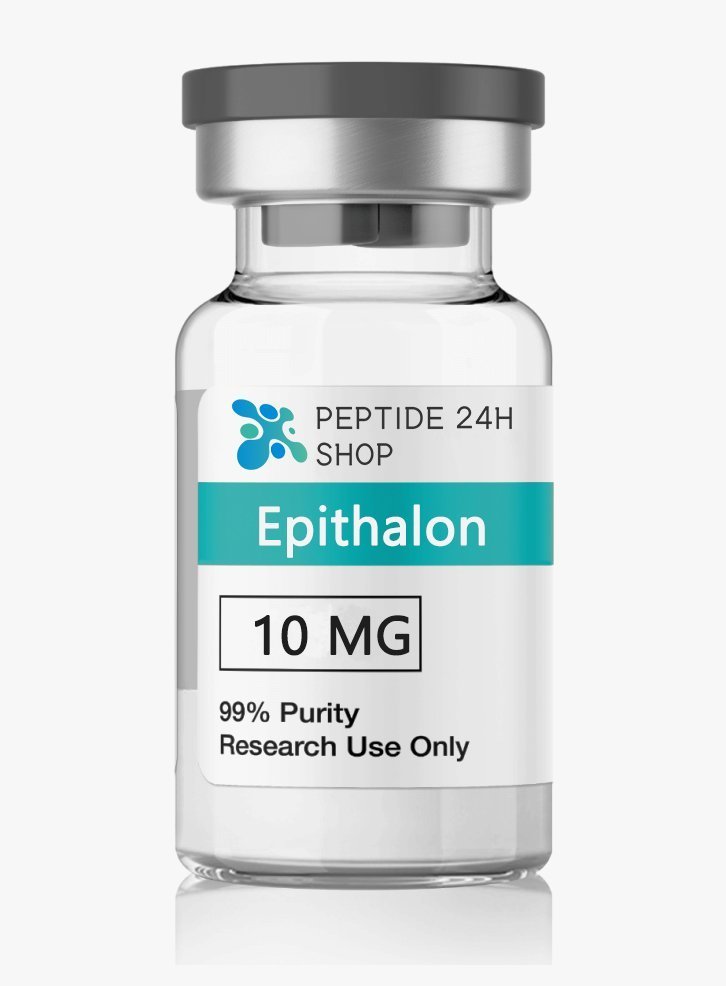
$43.00 – $230.00Price range: $43.00 through $230.00
Name: Epithalon; Epitalon; Epithalone
CAS No.: 307297-39-8
Peptide Sequence: H-Ala-Glu-Asp-Gly-OH
Molecular Formula: C14H22N4O9
Molecular Weight: 390.35
Appearance: White Lyophilized powder
Epithalon, also known as Epitalon or by its chemical sequence Ala-Glu-Asp-Gly, is a synthetic tetrapeptide widely studied in cellular aging, telomere biology, and peptide research. Designed as an analog of naturally occurring pineal gland peptides, Epithalon has attracted attention for its potential role in telomerase activation, cellular function regulation, and gene expression modulation.
This guide provides an overview of Epithalon’s structure, mechanisms, and research applications, making it a valuable resource for scientists, molecular biologists, and peptide enthusiasts studying longevity and cellular health.
Epithalon is a short synthetic tetrapeptide composed of four amino acids:
It is designed to mimic natural pineal peptides, which are involved in regulating circadian rhythms and other cellular processes.
In preclinical studies, Epithalon has been investigated for its effects on cellular senescence, telomere maintenance, and DNA stability, making it a key peptide in aging and longevity research.
The tetrapeptide’s small size allows efficient cellular uptake in both in vitro and in vivo models, facilitating interactions with nuclear and cytoplasmic targets that regulate aging and cellular repair.
While Epithalon’s exact mechanisms are still under study, current research highlights several potential effects:
Epithalon may stimulate telomerase, the enzyme responsible for maintaining and elongating telomeres, which protect chromosome ends from age-related shortening.
It may influence genes involved in cell cycle control, apoptosis, and cellular homeostasis, supporting overall cellular function.
Preclinical studies suggest Epithalon could reduce oxidative stress and help protect cells from damage.
⚠️ These effects have been observed mainly in cell cultures and animal models. Epithalon is strictly for research use and is not approved for clinical therapy.
Epithalon is primarily used in laboratory and preclinical research focusing on:
These applications make Epithalon a valuable peptide for gerontology, molecular biology, and peptide therapeutics research.
Proper storage ensures peptide stability and reproducibility in experiments:
Following these guidelines maintains peptide integrity and experimental reliability.
Epithalon is a research-grade peptide:
Q: Is Epithalon approved for medical use?
A: No, Epithalon is for research purposes only and is not regulated for clinical applications.
Q: How does Epithalon affect telomeres?
A: It may stimulate telomerase activity, supporting telomere maintenance in preclinical models.
Q: How should Epithalon be stored?
A: Lyophilized peptide should be stored at –20°C and reconstituted immediately before use.
Q: Can Epithalon enter cells?
A: Yes, its small molecular size allows cellular uptake in vitro and in vivo.
Epithalon (Ala-Glu-Asp-Gly) is a synthetic tetrapeptide with significant research potential in aging, telomere biology, and cellular regulation. While mechanisms continue to be studied, Epithalon serves as a valuable tool for understanding cellular longevity, molecular aging pathways, and peptide-based interventions.
For researchers, molecular biologists, and peptide enthusiasts, Epithalon offers a robust platform for advancing knowledge on cellular health and longevity research.





&url=https://primehealthpharmacy.com/product/ghk-tripeptide-1/&media=https://primehealthpharmacy.com/wp-content/uploads/2026/01/GHK-Tripeptide-1.jpg)

&url=https://primehealthpharmacy.com/product/elamipretide-ss-31/&media=https://primehealthpharmacy.com/wp-content/uploads/2026/01/Elamipretide-SS-31.jpg)


