
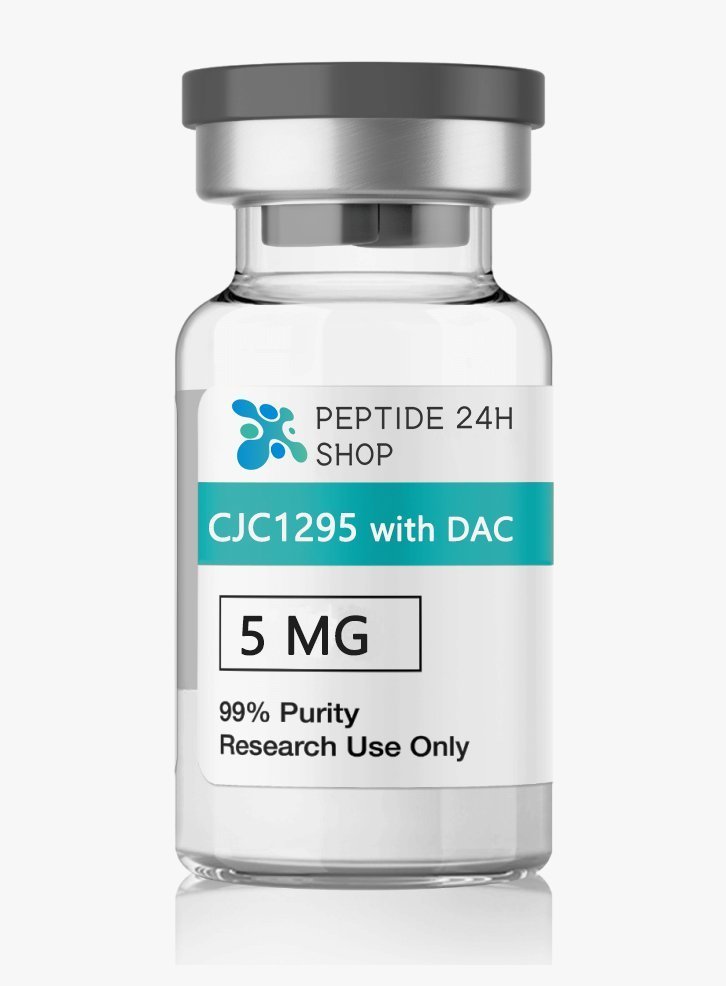
$55.00 – $240.00Price range: $55.00 through $240.00
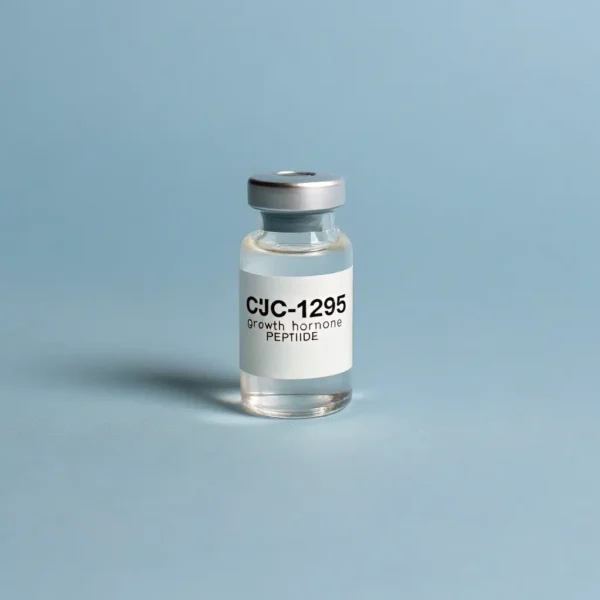
Name: CJC1295 With DAC; CJC-1295 DAC; CJC-1295 with DAC
CAS No.: N/A
Peptide Sequence: Tyr-D-Ala-Asp-Ala-Ile-Phe-Thr-Gln-Ser-Tyr-Arg-Lys-Val-Leu-Ala-Gln-Leu-Ser-Ala-Arg-Lys-Leu-Leu-Gln-Asp-Ile-Leu-Ser-Arg-Lys(Mal)-NH2
Molecular Formula: C165H269N47O46
Molecular Weight: 3647.28
Appearance: White Lyophilized powder
CJC-1295 With DAC (Drug Affinity Complex) is a long-acting growth hormone-releasing hormone (GHRH) analogue widely studied in peptide and endocrine research. Engineered to extend plasma half-life and enhance molecular stability, this synthetic peptide is commonly used in experimental models investigating growth hormone (GH) pulsatility, IGF-1 regulation, and albumin-binding peptide technology.
Unlike shorter-acting GHRH analogues, CJC-1295 With DAC is designed for prolonged systemic exposure, making it particularly relevant in studies focused on sustained GH stimulation and downstream endocrine signaling.
This article is for informational and research purposes only. CJC-1295 With DAC is not approved for therapeutic or medical use.
CJC-1295 is a modified analogue of GHRH (1-29), the active fragment responsible for stimulating growth hormone release from the anterior pituitary gland.
The “With DAC” version includes a Drug Affinity Complex — a molecular modification that enables reversible binding to serum albumin. This albumin-binding capability dramatically increases the peptide’s half-life compared to native GHRH or the No DAC variant.
Because of this extended circulation time, CJC-1295 With DAC is often categorized as an extended-release GHRH analogue.
The Drug Affinity Complex (DAC) attaches to specific lysine residues on the peptide, allowing reversible binding to circulating plasma albumin.
The result is prolonged systemic activity — often maintaining detectable biological effects for up to 6–8 days in controlled research models.
This pharmacokinetic profile makes it significantly longer acting than CJC-1295 No DAC, which has a much shorter half-life.
| Property | CJC-1295 With DAC | CJC-1295 No DAC |
|---|---|---|
| Albumin Binding | Yes | No |
| Approximate Half-Life | 6–8 days | < 24 hours |
| Research Dosing Frequency | 1–2× weekly | Daily |
| GH Release Pattern | Sustained | Pulsatile |
| Primary Research Focus | Long-term GH/IGF-1 modulation | Acute GH kinetics |
The presence of the DAC modification is the defining difference between the two variants, significantly altering pharmacokinetics and research applications.
In laboratory and preclinical environments, CJC-1295 With DAC is used to investigate:
Its prolonged activity makes it particularly useful for studying the effects of extended GH exposure rather than short, pulsatile stimulation.
It is important to note that CJC-1295 With DAC remains a research-use-only compound and is not approved for clinical treatment in most jurisdictions.
As with all synthetic research peptides, proper laboratory handling is essential for stability and reproducibility.
Published research observations have reported transient effects such as flushing or injection-site irritation. However, these are experimental findings and do not constitute clinical safety data.
CJC-1295 With DAC demonstrates how peptide engineering can alter pharmacokinetic properties through albumin-binding modifications. By extending half-life and reducing degradation, researchers can examine:
Its design offers a clear example of how structural peptide modifications influence biological duration and systemic exposure.
CJC-1295 With DAC is a long-acting GHRH analogue engineered for extended systemic stability through albumin binding. In research environments, it is valued for its prolonged half-life, sustained GH stimulation, and ability to support endocrine modeling studies involving IGF-1 regulation.
While scientifically significant, CJC-1295 With DAC remains strictly a research compound and is not approved for therapeutic use. Researchers should source peptides from certified suppliers and follow institutional and regulatory guidelines for laboratory handling.






&url=https://primehealthpharmacy.com/product/ghk-tripeptide-1/&media=https://primehealthpharmacy.com/wp-content/uploads/2026/01/GHK-Tripeptide-1.jpg)


&url=https://primehealthpharmacy.com/product/elamipretide-ss-31/&media=https://primehealthpharmacy.com/wp-content/uploads/2026/01/Elamipretide-SS-31.jpg)


