
$150.00 – $260.00Price range: $150.00 through $260.00
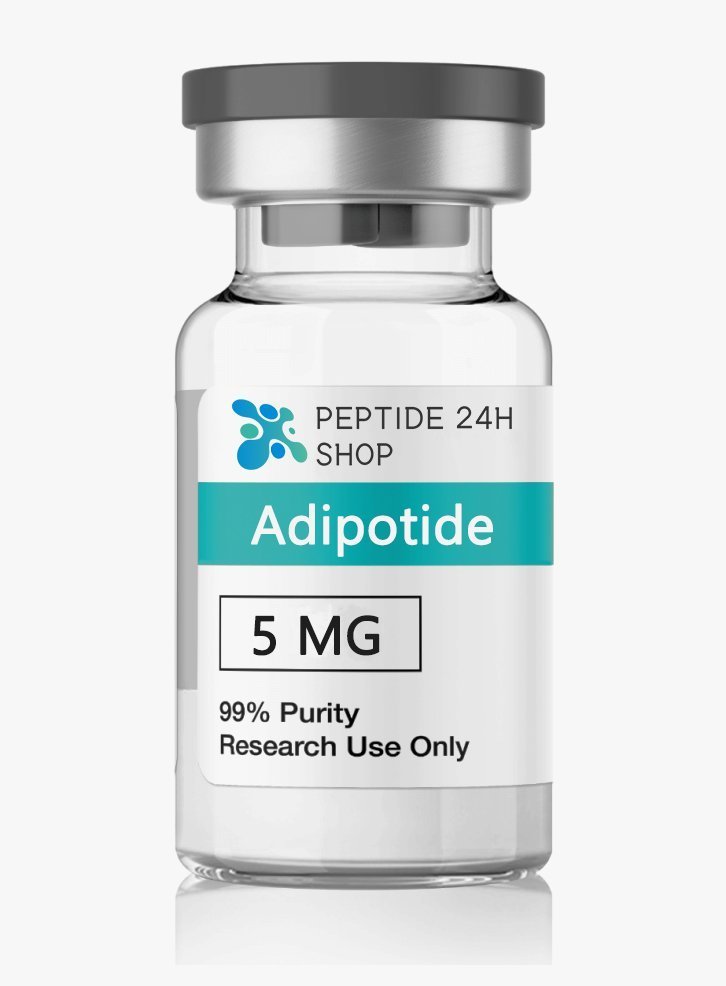
Name: Adipotide (FTPP)
CAS No.: N/A
Peptide Sequence: Cys-Lys-Gly-Gly-Arg-Ala-Lys-Asp-Cys??Gly-Gly?C(Lys-Leu-Ala-Lys-Leu-Ala-Lys)2
Molecular Formula: C111H204N36O28S2
Molecular Weight: 2555.2
Appearance: White Lyophilized powder
Adipotide (also known as Prohibitin-TP01 or FTPP) is an investigational peptidomimetic compound developed to target white adipose tissue (WAT) through vascular mechanisms rather than appetite suppression or metabolic stimulation.
Unlike traditional weight-management compounds, Adipotide is designed to selectively bind to receptors expressed on the blood vessels supplying white fat tissue. By disrupting this vascular supply, the compound aims to induce fat-cell loss through targeted endothelial apoptosis.
It is important to note that Adipotide remains experimental and is not approved for clinical or commercial weight-loss use.
Adipotide is a synthetic peptide composed of:
This dual-component structure enables selective targeting of endothelial cells supplying white fat tissue.
Adipotide works through a multi-stage biological process:
The N-terminal targeting sequence binds to prohibitin and ANXA2 receptors on endothelial cells feeding white adipose tissue.
Once bound, the peptide is internalized into the endothelial cells.
The pro-apoptotic D(KLAKLAK)₂ motif disrupts mitochondrial membranes, triggering:
Destruction of the endothelial cells reduces blood supply to downstream adipocytes. Without nutrients and oxygen, fat cells undergo secondary cell death, reducing fat mass.
Most conventional compounds act by:
Adipotide instead focuses on vascular targeting of white adipose tissue, representing a structurally and mechanistically distinct approach to fat reduction research.
In obese rodent models, treatment with Adipotide resulted in significant reductions in body weight over short study durations, with some models reporting weight loss approaching 30% within 28 days.
In obese rhesus monkey studies:
These findings supported proof-of-concept for vascular fat targeting.
A Phase 1 clinical trial was initiated to evaluate safety and tolerability in patients with advanced prostate cancer.
However:
As a result, Adipotide is not approved for therapeutic use.
Preclinical data suggested:
Importantly, metabolic improvements were sometimes observed before substantial weight loss occurred.
Despite promising preclinical data, several limitations exist:
Studies reported reversible proximal tubule changes in primates, raising concerns about kidney safety.
Human trials were limited and discontinued, leaving long-term safety unknown.
Adipotide remains experimental and is not approved by regulatory agencies for weight-loss or metabolic treatment.
Research protocols involved daily subcutaneous injections, which may limit practical application.
Adipotide:
Any non-research use may carry legal and health risks.
Adipotide represents one of the most innovative approaches in fat-loss research by targeting the blood vessels that supply white adipose tissue rather than altering appetite or metabolism directly.
Preclinical studies demonstrated meaningful reductions in fat mass and metabolic improvements. However, clinical development was discontinued due to safety concerns, particularly nephrotoxicity. Human safety, long-term effects, and therapeutic viability remain unresolved.
At present, Adipotide should be regarded as an experimental vascular-targeting peptide with promising mechanistic innovation but significant safety limitations and non regulatory approval.
Balanced discussion of Adipotide should emphasize:





&url=https://primehealthpharmacy.com/product/ghk-tripeptide-1/&media=https://primehealthpharmacy.com/wp-content/uploads/2026/01/GHK-Tripeptide-1.jpg)


&url=https://primehealthpharmacy.com/product/elamipretide-ss-31/&media=https://primehealthpharmacy.com/wp-content/uploads/2026/01/Elamipretide-SS-31.jpg)


