
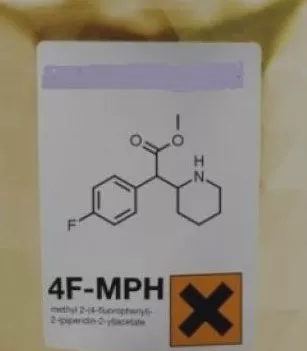
$150.00 – $1,900.00Price range: $150.00 through $1,900.00
ChemSpider ID: 26350585
Other name: 4-Fluoromethylphenidate
4-Fluoromethylphenidate (4F-MPH) is a synthetic stimulant belonging to the phenethylamine and piperidine chemical classes. It is structurally related to methylphenidate, a widely prescribed medication used in the treatment of attention deficit hyperactivity disorder (ADHD) under brand names such as Ritalin and Concerta.
As a methylphenidate analogue, 4F-MPH features a fluorine substitution that alters its chemical structure and potentially modifies its pharmacological profile. These structural adjustments may influence potency, duration of action, and side-effect characteristics when compared to traditional methylphenidate.
Interest in 4F-MPH has grown in both research and online communities due to its stimulant properties. However, comprehensive clinical research remains limited. Understanding its mechanism of action, potential cognitive effects, and associated risks is essential as it becomes more visible within discussions of novel psychoactive substances (NPS).
4-Fluoromethylphenidate primarily acts as a central nervous system (CNS) stimulant. Its mechanism of action closely resembles that of methylphenidate.
4F-MPH exerts its effects by inhibiting:
By blocking the reuptake of dopamine and norepinephrine, it increases the concentration of these neurotransmitters in the synaptic cleft. Elevated dopamine levels are associated with improved focus, motivation, and reward signaling, while increased norepinephrine contributes to heightened alertness and cognitive stimulation.
The fluorinated modification in 4F-MPH may:
Some preliminary analyses suggest that fluorination could impact pharmacokinetics, potentially resulting in prolonged or intensified stimulant effects. However, more controlled research is required to confirm these observations.
Because subtle chemical changes can significantly alter pharmacodynamics, careful scientific evaluation is necessary before drawing conclusions about therapeutic equivalence or safety comparisons with methylphenidate.
4F-MPH has been described as producing stimulant and cognitive-enhancing effects. Reported effects may include:
Due to its similarity to methylphenidate, some discussions have explored its theoretical relevance in attention-related conditions. However, 4F-MPH is not an approved medication, and there is insufficient clinical evidence supporting therapeutic use.
User reports frequently describe improved productivity and sustained focus. In some cases, individuals report euphoric sensations, which may contribute to non-medical use.
However, stimulant-induced cognitive enhancement is often dose-dependent and highly variable. Individual responses can differ significantly based on physiology, mental health status, and concurrent substance use.
As with other stimulant compounds, 4-Fluoromethylphenidate carries potential health risks.
Acute adverse effects may include:
Individuals with preexisting cardiovascular or anxiety disorders may be at greater risk of experiencing complications.
Long-term or repeated use may raise concerns regarding:
As tolerance increases, individuals may escalate dosage, increasing the likelihood of adverse effects. The absence of long-term clinical studies makes it difficult to fully assess chronic health consequences.
Risk mitigation strategies discussed in public health contexts often include:
However, due to limited clinical oversight and regulatory variation, safety data remains incomplete.
The legal status of 4F-MPH varies significantly across jurisdictions.
In many countries, it is regulated under analogue or novel psychoactive substance (NPS) legislation. Some regions classify it as a controlled substance due to its structural similarity to methylphenidate and potential for misuse.
Regulatory challenges arise because:
Authorities continue to monitor emerging stimulant analogues, including 4-Fluoromethylphenidate, under evolving drug policy frameworks.
Anyone researching or encountering this compound should verify current local regulations, as legal classification can change.
Further investigation into 4F-MPH is necessary to clarify:
As the landscape of novel stimulants evolves, collaboration between researchers, policymakers, and healthcare providers will remain essential. Balanced approaches that combine regulation, research, and public education are critical to minimizing potential harm.















&url=https://primehealthpharmacy.com/product/methoxetamine-mxe/&media=https://primehealthpharmacy.com/wp-content/uploads/2026/01/MethoxetamineMXE.webp)


&url=https://primehealthpharmacy.com/product/methamphetamine-crystal-meth/&media=https://primehealthpharmacy.com/wp-content/uploads/2026/01/Methamphetamine-1024x824.jpg)
&url=https://primehealthpharmacy.com/product/amphetamine-speed-powder/&media=https://primehealthpharmacy.com/wp-content/uploads/2026/01/Speed-Powder.jpg)

&url=https://primehealthpharmacy.com/product/lgd-4033-ligandrol/&media=https://primehealthpharmacy.com/wp-content/uploads/2026/01/tenweb_media_ssyntocwe.webp)
&url=https://primehealthpharmacy.com/product/mk-677-ibutamoren/&media=https://primehealthpharmacy.com/wp-content/uploads/2026/01/tenweb_media_SWEW5ITMU.webp)
%20SARMs&url=https://primehealthpharmacy.com/product/rad-140-testolone-sarms/&media=https://primehealthpharmacy.com/wp-content/uploads/2026/01/tenweb_media_sxmj9l4ok.webp)