
$85.00 – $259.00Price range: $85.00 through $259.00
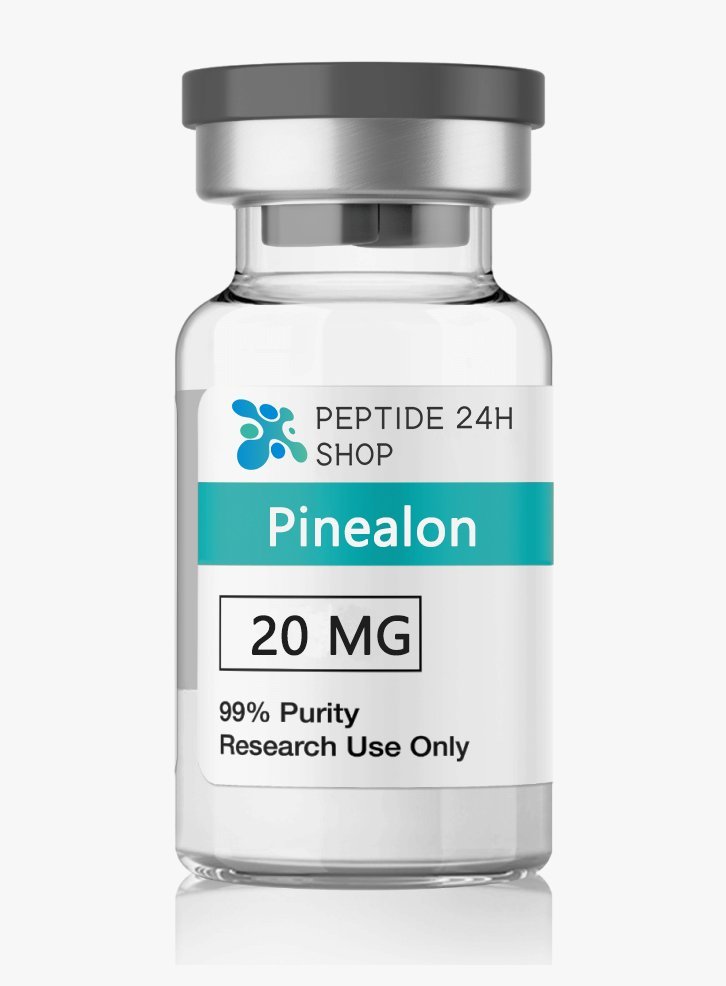
Name: Pinealon; glutamyl-aspartyl-arginine
CAS No.: N/A
Peptide Sequence: H-Glu-Asp-Arg-OH
Molecular Formula: C15H26N6O8
Molecular Weight: 418.4
Appearance: White Lyophilized powder
Pinealon is a synthetic tripeptide (Glu-Asp-Arg) widely used in neurochemical and biochemical research. Derived from naturally occurring short peptides, it serves as a model compound to study cellular protection, oxidative regulation, and peptide-mediated signaling in neural and endocrine systems.
Note: Pinealon is strictly for research use only (RUO) and is not approved for therapeutic or dietary applications.
Its short, three-amino-acid sequence allows precise evaluation of peptide interactions and cellular responses under controlled laboratory conditions.
Pinealon belongs to the class of regulatory tripeptides, designed to mimic fragments of natural regulatory proteins that influence gene expression, cell proliferation, and metabolic homeostasis.
In research settings, Pinealon is used to study:
It serves as a key experimental model for understanding short-chain peptide biochemistry.
Pinealon is applied across multiple scientific disciplines:
Its minimalistic design makes it an ideal model for short-peptide functional studies.
Research Use Only: Not for human, veterinary, or dietary applications.
Pinealon peptide is a versatile research tool for studying short-chain peptides, cellular stability, and oxidative regulation. Its simple yet bioactive structure makes it a reliable model for investigating molecular signaling, metabolic processes, and neurochemical regulation in laboratory research.
Though not intended for clinical use, Pinealon continues to provide valuable insights into peptide bioregulation and cellular homeostasis in modern biochemistry.





&url=https://primehealthpharmacy.com/product/ghk-tripeptide-1/&media=https://primehealthpharmacy.com/wp-content/uploads/2026/01/GHK-Tripeptide-1.jpg)


&url=https://primehealthpharmacy.com/product/elamipretide-ss-31/&media=https://primehealthpharmacy.com/wp-content/uploads/2026/01/Elamipretide-SS-31.jpg)


