
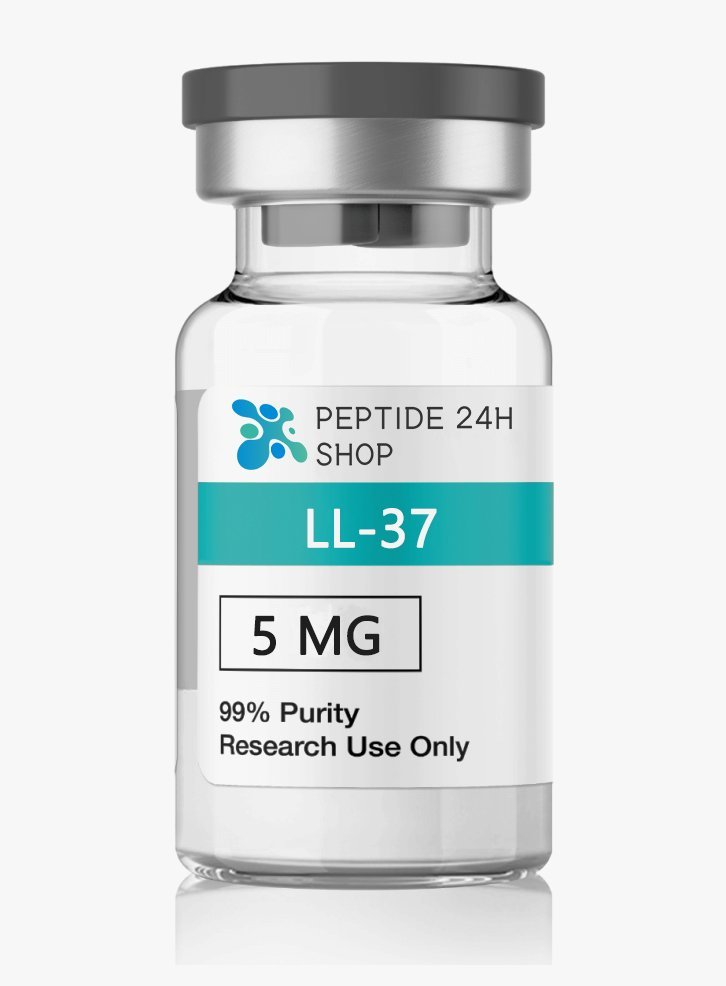
$65.00 – $189.00Price range: $65.00 through $189.00
Name: LL-37 humam; LL-37; CAP-18; Cathelicidin; ropocamptide
CAS No.: 154947-66-7
Peptide Sequence: Leu-Leu-Gly-Asp-Phe-Phe-Arg-Lys-Ser-Lys-Glu-Lys-Ile-Gly-Lys-Glu-Phe-Lys-Arg-Ile-Val-Gln-Arg-Ile-Lys-Asp-Phe-Leu-Arg-Asn-Leu-Val-Pro-Arg-Thr-Glu-Ser
Molecular Formula: C205H340N60O53
Molecular Weight: 4493.26
Appearance: White Lyophilized powder
🧬 LL-37 Peptide – Antimicrobial and Immunomodulatory Research Peptide
LL-37 is a naturally occurring antimicrobial peptide derived from the human cathelicidin protein (hCAP18). It is a key component of the innate immune system, helping protect the body against bacteria, viruses, and fungi. In research, LL-37 is valued for its antimicrobial, anti-inflammatory, and tissue-repair properties, making it a common focus in microbiology, immunology, wound healing, and inflammation studies.
Important: LL-37 peptide is strictly for laboratory research and is not approved for therapeutic or clinical use.
LL-37 demonstrates both direct antimicrobial activity and immune system modulation:
a) Antimicrobial Effects
b) Immune Modulation
c) Tissue Healing
LL-37 is widely studied in laboratory settings for its versatile properties:
Note: All research is preclinical. LL-37 is not intended for human use.
| Feature | Research Benefit |
|---|---|
| Broad-spectrum antimicrobial | Active against bacteria, fungi, viruses |
| Immunomodulatory effects | Balances inflammation and immune response |
| Tissue-repair support | Enhances wound healing and angiogenesis |
| High stability & purity | Reliable and reproducible lab results |
| Multi-disciplinary use | Relevant in microbiology, immunology, dermatology |
To ensure consistency and reproducibility:
Q1. What is LL-37 peptide?
A: A human cathelicidin-derived peptide with antimicrobial and immune-regulating properties used in research.
Q2. Can LL-37 be used therapeutically?
A: No. It is strictly for laboratory and research use.
Q3. How should LL-37 be stored?
A: −20°C, dry and protected from light.
Q4. What research areas is LL-37 used for?
A: Antimicrobial studies, immune modulation, wound healing, inflammation, and biofilm research.
LL-37 peptide is a versatile research tool combining antimicrobial activity, immune regulation, and tissue-repair properties. Its synthetic form allows precise, reproducible experiments in microbiology, immunology, and regenerative medicine research.
Disclaimer: LL-37 peptide is for laboratory research only. Not for human or veterinary use.




&url=https://primehealthpharmacy.com/product/ghk-tripeptide-1/&media=https://primehealthpharmacy.com/wp-content/uploads/2026/01/GHK-Tripeptide-1.jpg)


&url=https://primehealthpharmacy.com/product/elamipretide-ss-31/&media=https://primehealthpharmacy.com/wp-content/uploads/2026/01/Elamipretide-SS-31.jpg)


