
$45.00 – $800.00Price range: $45.00 through $800.00
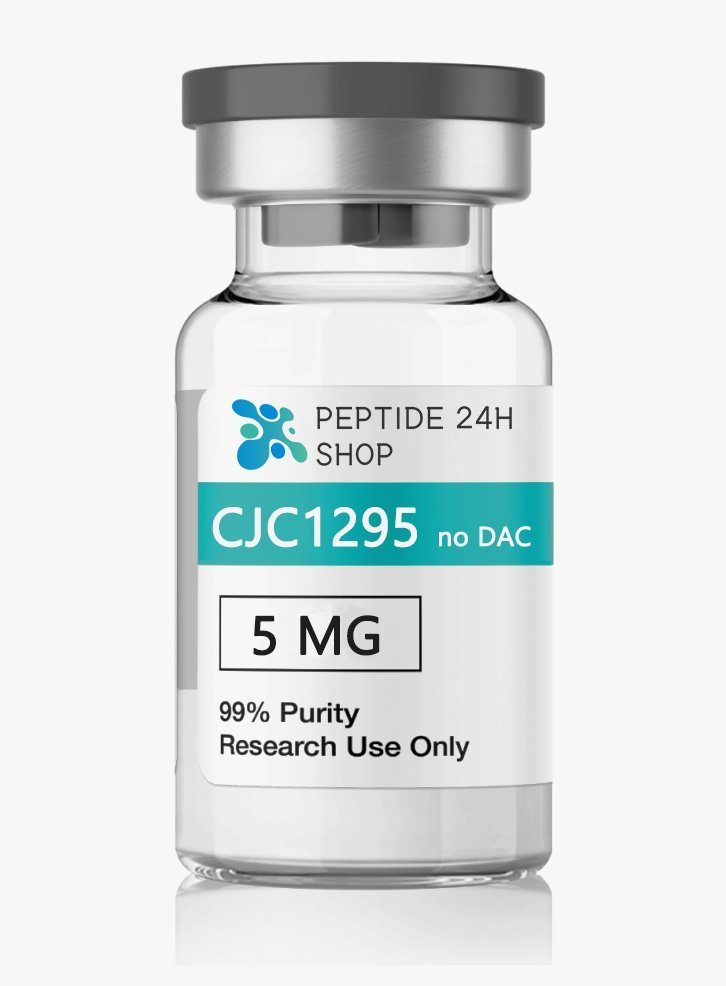
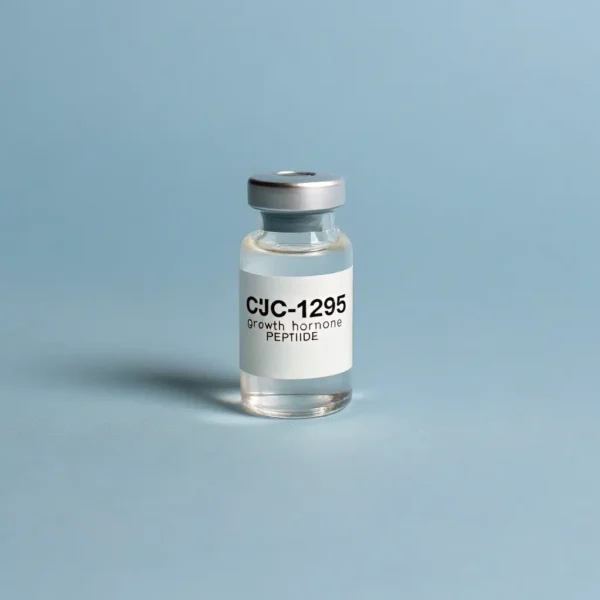
Name: CJC1295 No DAC; CJC1295; Modified GRF (1-29)
CAS No.: 863288-34-0
Peptide Sequence: Tyr-D-Ala-Asp-Ala-Ile-Phe-Thr-Gln-Ser-Tyr-Arg-Lys-Val-Leu-Ala-Gln-Leu-Ser-Ala-Arg-Lys-Leu-Leu-Gln-Asp-Ile-Leu-Ser-Arg-NH2
Molecular Formula: C152H252N44O42
Molecular Weight: 3367.97
Appearance: White Lyophilized powder
CJC‑1295 no DAC is a synthetic analogue of Growth Hormone-Releasing Hormone (GHRH) designed specifically for research applications. Unlike its DAC-containing counterpart, the no DAC variant lacks a Drug Affinity Complex (DAC), resulting in a shorter half-life and a pulsatile growth hormone (GH) release profile. This makes it particularly useful for experimental models that aim to mimic natural GH secretion dynamics.
This article provides a detailed overview of CJC‑1295 no DAC, including its molecular structure, mechanism of action, research applications, handling guidelines, safety considerations, and limitations. This information is intended solely for educational and research purposes.
CJC‑1295 is a synthetic GHRH analogue (also referred to as GRF 1‑29). The “no DAC” version omits the DAC moiety, which in other variants prolongs the peptide’s half-life. By avoiding continuous GH exposure, CJC‑1295 no DAC supports pulsatile GH secretion, closely reflecting endogenous physiological patterns.
The short-acting nature of no DAC makes it a preferred choice for studies requiring precise timing of GH release.
CJC‑1295 no DAC primarily acts through the GHRH receptor (GHRH-R) on anterior pituitary somatotrophs:
CJC‑1295 no DAC is widely utilized in experimental and preclinical research settings:
Due to limited human data, clinical translation remains speculative, and all applications should be confined to controlled research environments.
Proper handling is essential to maintain peptide integrity:
When sourcing CJC‑1295 no DAC:
CJC‑1295 no DAC is a research-focused GHRH analogue that provides pulsatile stimulation of endogenous growth hormone, making it a valuable tool for endocrine, peptide, and IGF‑1 research. By omitting the DAC moiety, it allows for precise, time-controlled studies of GH secretion, receptor dynamics, and downstream signaling pathways.
While preclinical evidence highlights its potential in modeling physiological GH pulses, clinical translation remains speculative. Its use is best restricted to carefully controlled research environments where dosing, timing, and experimental variables can be rigorously monitored.






&url=https://primehealthpharmacy.com/product/ghk-tripeptide-1/&media=https://primehealthpharmacy.com/wp-content/uploads/2026/01/GHK-Tripeptide-1.jpg)


&url=https://primehealthpharmacy.com/product/elamipretide-ss-31/&media=https://primehealthpharmacy.com/wp-content/uploads/2026/01/Elamipretide-SS-31.jpg)


