Aviptadil Peptide (Synthetic VIP): Mechanism, Research Applications & Safety Overview
Introduction to Aviptadil Peptide
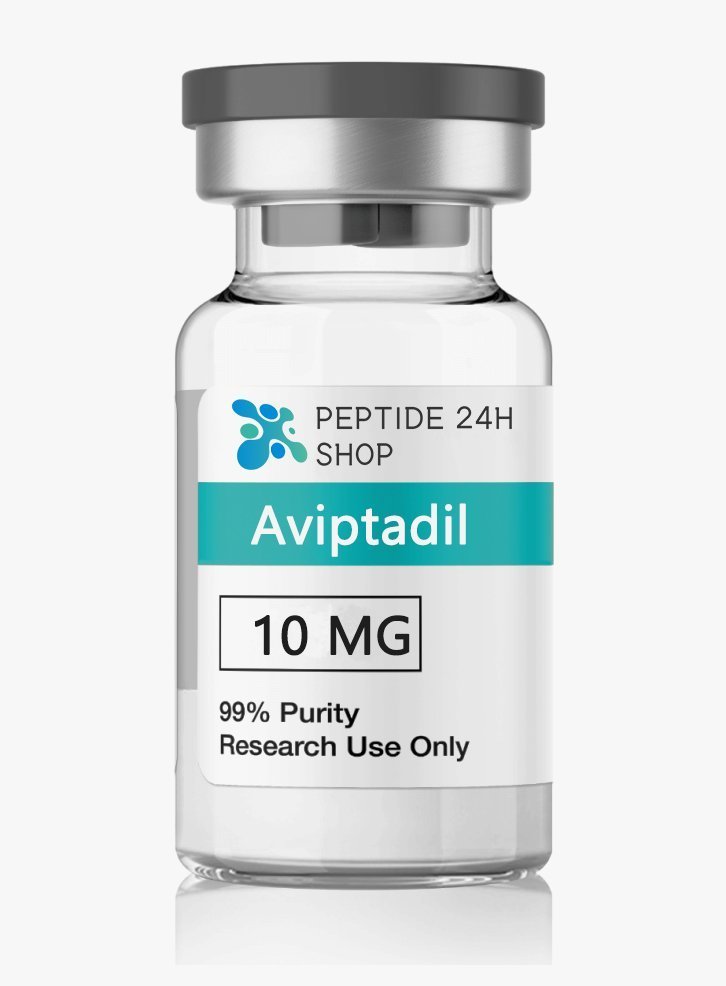
In the growing field of peptide research, Aviptadil peptide—a synthetic form of Vasoactive Intestinal Peptide (VIP)—is attracting attention for its potential role in lung, vascular, and immune system studies. While not an approved therapy, it is being investigated for its unique biological activity in preclinical and early human research settings.
This guide provides an evidence-based overview of:
- What Aviptadil peptide is
- Its mechanism of action
- Current research findings
- Practical research-use considerations
- Safety, handling, and regulatory status
Note: All information is for educational purposes only and does not constitute medical advice.
What Is Aviptadil?
Aviptadil is a synthetic analog of VIP, a 28-amino-acid neuropeptide naturally distributed in the lungs, digestive tract, blood vessels, and immune system.
Key points:
- Alternative names: Aviptadil acetate, synthetic VIP
- Type: Polypeptide / investigational peptide
- Current use: Primarily research or investigational; not approved for general consumer or therapeutic use
- Brand example: ZYESAMI®
Because natural VIP has a very short half-life and is unstable, Aviptadil is engineered for improved stability and targeted experimental use.
Mechanism of Action: How Aviptadil Works in Research
Understanding Aviptadil involves looking at VIP biology and its receptor systems.
VIP Receptors and Target Cells
- Aviptadil binds mainly to VPAC1 and VPAC2 G-protein-coupled receptors, with minor activity at PAC1.
- In the lungs, alveolar type II (AT-II) cells are a primary target. These cells are responsible for:
- Surfactant production
- Maintaining lung barrier function
- Epithelial integrity
Pulmonary and Tissue Protective Effects
Research indicates Aviptadil/VIP may influence:
- Surfactant up-regulation in AT-II cells
- Cytokine modulation, reducing IL-6 and TNF-α in experimental models
- Vascular and epithelial responses, including vasodilation and barrier protection
- Anti-viral or cell-protective effects in certain in vitro studies
These mechanisms are experimental and do not establish clinical benefits.
Research Evidence to Date
Preclinical Studies
- Cell culture and animal models: Aviptadil analogs improve lung cell survival, reduce pro-inflammatory cytokines, and protect epithelial and vascular function.
- Mechanistic assays: Inhibition of caspase-3 and MMP activity observed in alveolar macrophages and lung epithelial lines.
Human / Investigational Studies
- Critical COVID-19 respiratory failure trial:
- Primary endpoint not statistically significant
- Improved survival at day 60 (OR 2.0; 95% CI 1.1–3.9)
- Stronger effect in patients on high-flow nasal oxygen or mechanical ventilation
- Other early investigations: Pulmonary arterial hypertension (PAH) and lung injury models
Clinical data are limited; Aviptadil remains investigational.
Practical Considerations for Researchers
Form, Storage & Handling
- Supplied as lyophilized powder for research use only
- Storage: Low temperature, protected from light and moisture
- Reconstitution: Sterile water or suitable buffer; avoid vigorous shaking
Legal & Regulatory Status
- Investigational only; not FDA-approved for general therapeutic or consumer use
- Some studies have Fast Track designation for critical COVID-19 applications
- Marketing cannot claim treatment, prevention, or cure of disease
Safety and Unknowns
- Short half-life and stability limitations
- Early trials show acceptable tolerability, but long-term safety remains unknown
- Off-label or non-approved use carries high uncertainty and legal risk
Research Applications (Informational Only)
Aviptadil is of high interest in research, particularly in:
- Lung injury and ARDS models
- Pulmonary arterial hypertension (PAH) studies
- Immune modulation and cytokine research
- Advanced peptide research toolkits for epithelial and vascular protection
Results are experimental and do not guarantee therapeutic effect.
Summary: Understanding Aviptadil in Research Context
Aviptadil peptide (synthetic VIP) is a compelling research peptide due to its:
- Lung receptor binding and AT-II cell targeting
- Surfactant up-regulation and epithelial protection
- Cytokine and immune modulation potential
Although mechanistically promising, it is investigational and not approved for therapeutic use. Research content should emphasize:
- What Aviptadil is
- Mechanistic research findings
- Practical research considerations
- Current gaps and unknowns
Disclaimer: This article is for educational and informational purposes only. Aviptadil peptide is investigational and not approved for medical, therapeutic, or dietary use.
Related





&url=https://primehealthpharmacy.com/product/ghk-tripeptide-1/&media=https://primehealthpharmacy.com/wp-content/uploads/2026/01/GHK-Tripeptide-1.jpg)


&url=https://primehealthpharmacy.com/product/elamipretide-ss-31/&media=https://primehealthpharmacy.com/wp-content/uploads/2026/01/Elamipretide-SS-31.jpg)


